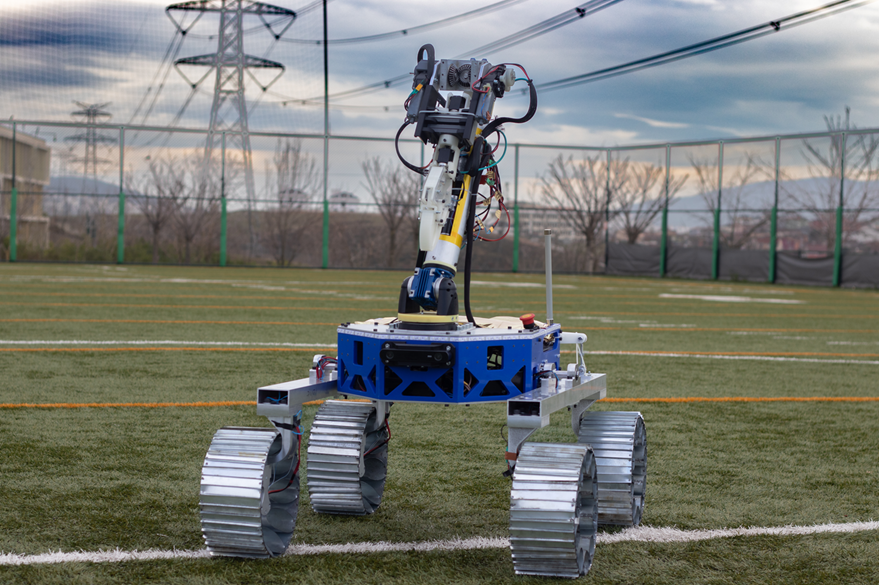
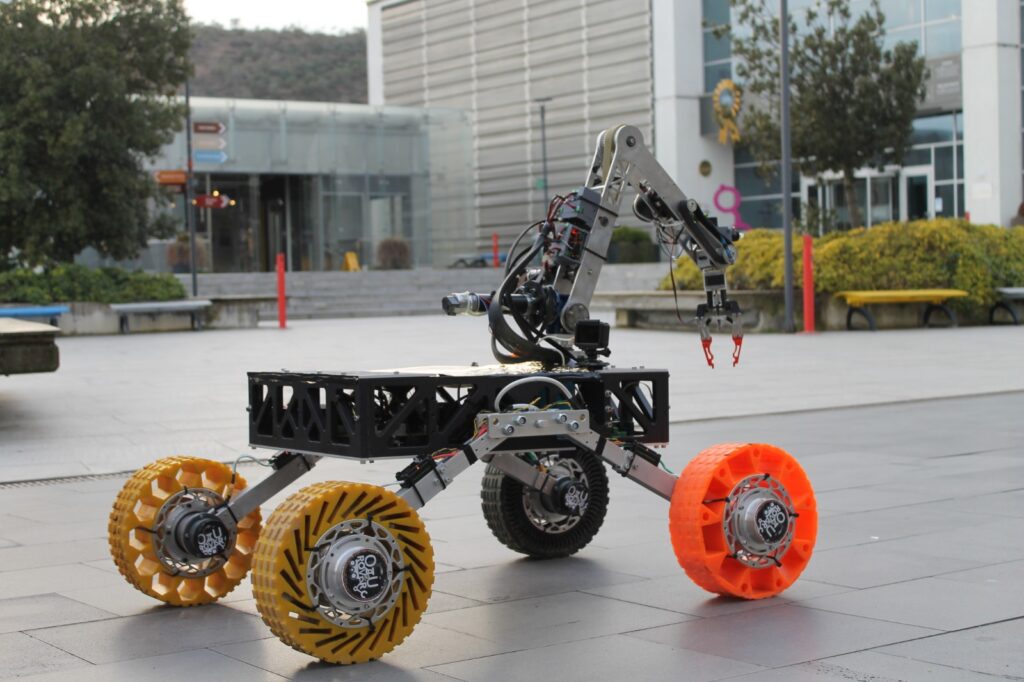
ARES-II, the 9th generation rover of the OzU Rover Team, focused on achieving a more refined and efficient design. The 6 DOF robotic arm was developed using cycloidal drives to improve the reliability and precision of the manipulator. To reduce weight, carbon fiber tubes were integrated into the arm’s structure. Additionally, the wheels were redesigned using TPU 95A material, enhancing traction by increasing flexibility.
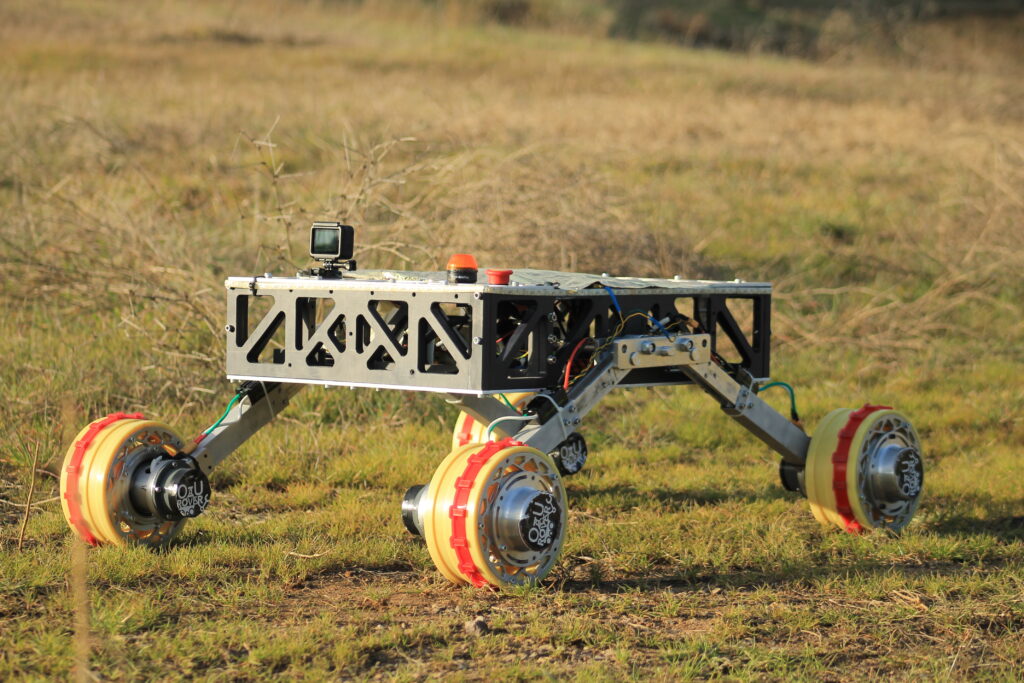
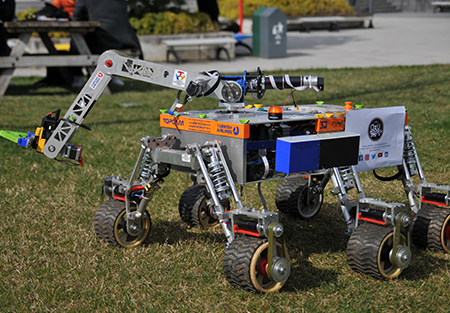
ARES-I, the 8th generation rover of the OzU Rover Team, introduced major innovations in its design. In this generation, the locomotion system, chassis, and wheels were completely redesigned to enhance performance and adaptability on rough terrain. The team proudly participated in the URC 2023 competition with ARES-I, marking another important milestone in their journey of continuous improvement and innovation.
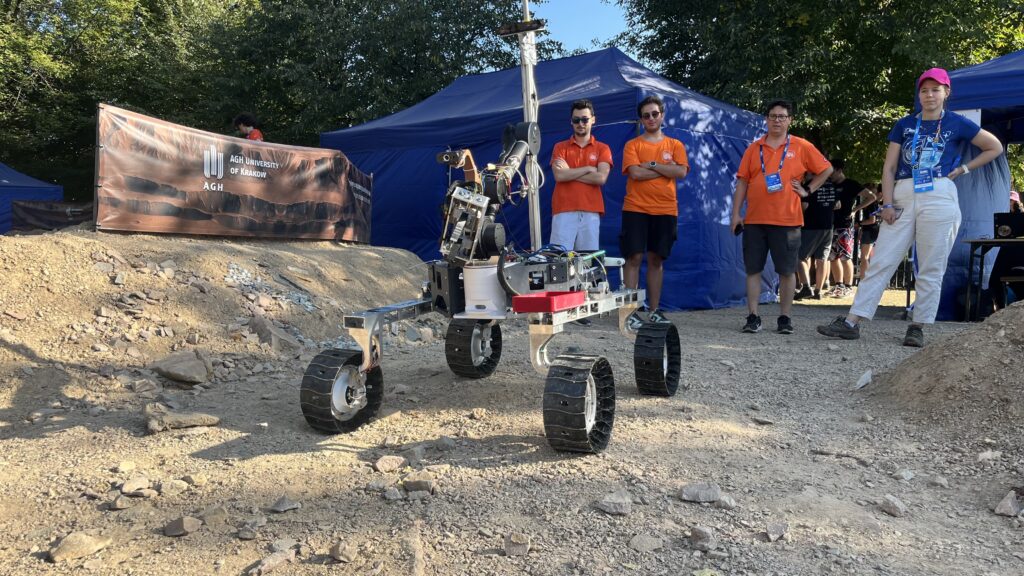
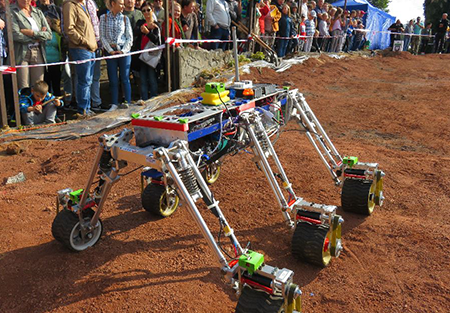
Merih-II features 6 motorized wheels with front and rear steering, and a Rocker-Bogie suspension system for stable movement on uneven terrain. It includes a 4-DoF robotic arm with a multifunctional gripper capable of collecting samples and interacting with tools or switches. Powered by Raspberry Pi 3 and controlled via ROS, the system uses Python and C for programming. Communication between the rover and base station is maintained through 2.4 GHz modems, enabling real-time control and streaming from 4 onboard IP cameras.
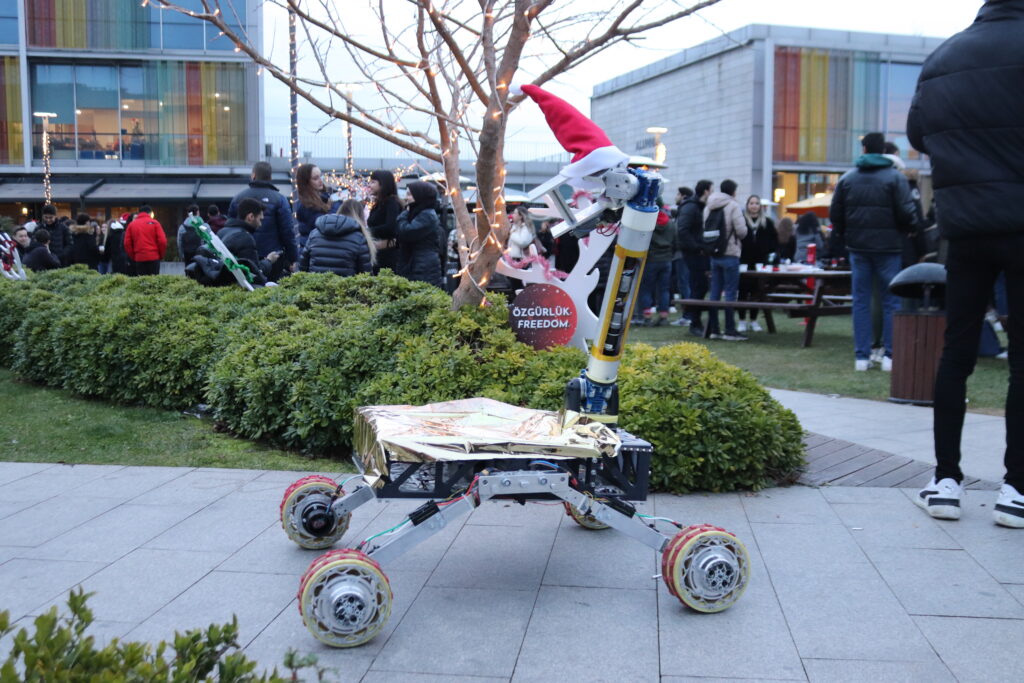
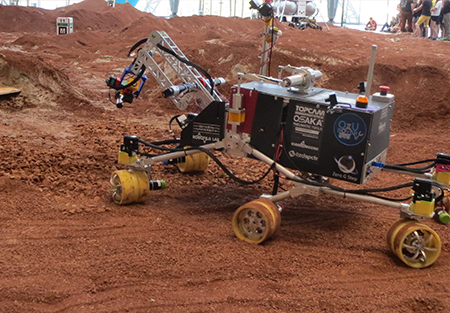
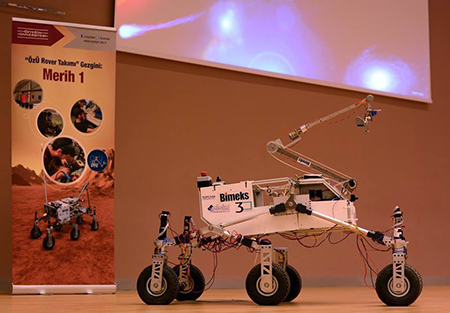
Merih-I, as first planetary rover of Turkey, has a suspension system called Rocker-Bogie which consists of six wheels and its differential. The arm of Merih-I has five degrees of freedom and mechanism which can be used as holder or shovel due to its assignment. The control system of Merih-I is built on one Model B and two Arduino Mega 2560. The software of the robot is controlled by using Robot Operating System (ROS). The actions of robot are handled with Arduinos which collects commands from the computer in control point through ROS. The connection between robot and the control computer is procured with a wireless network reaching up to 5 km.